
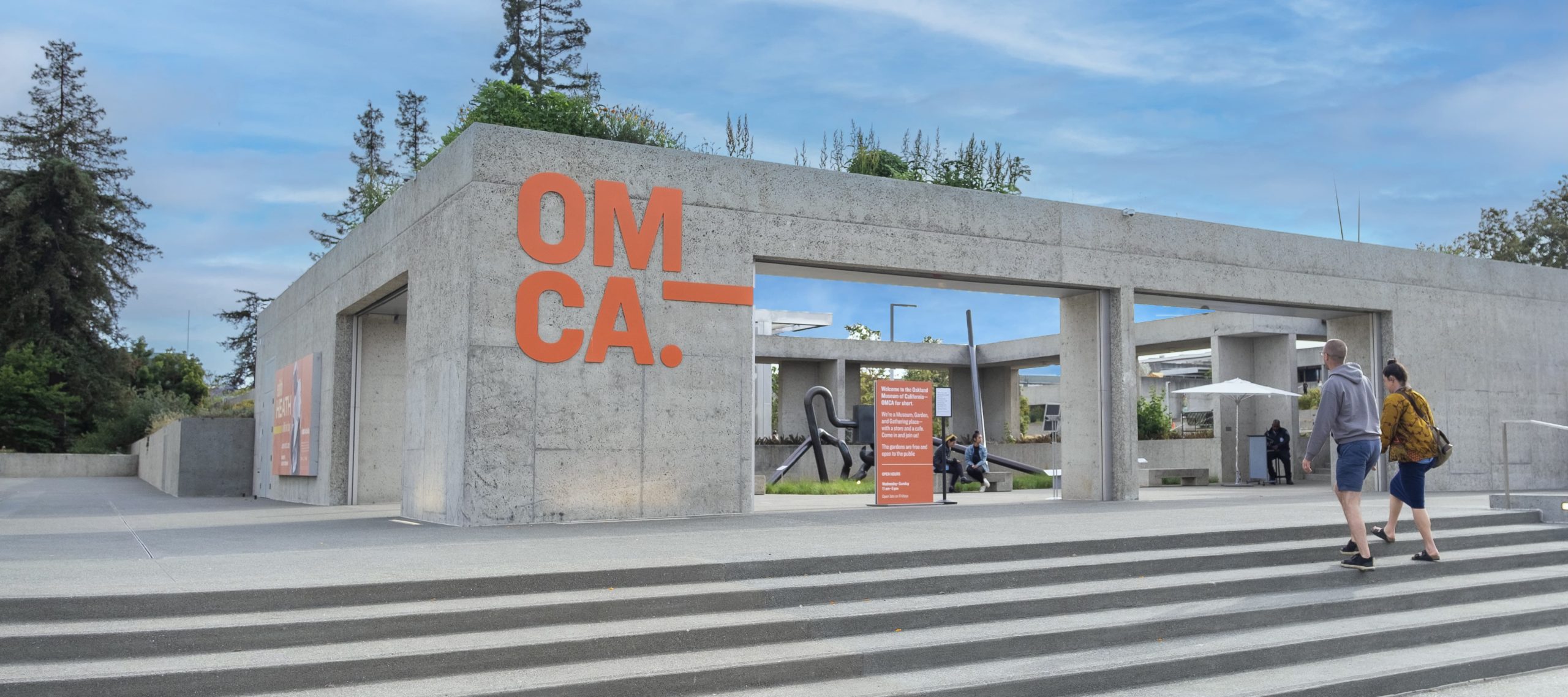
Few people know the Oakland Museum of California (OMCA) better than School alumna Lisa Silberstein, who has spent the last 17 years shaping OMCA’s exhibitions. As an experience developer, Silberstein works with curators and designers to make the exhibits engaging for visitors, developing audio and video experiences, creating interactive elements, and working with community partners. Founded in 1969, the museum is a center for California’s history, featuring exhibits that bring together art, history, and natural sciences into impactful interactive displays.
A highlight of Silberstein’s career was the well-received multimedia exhibit All Power to the People: Black Panthers at 50, which opened in 2016. The exhibition coincided with Donald Trump’s election, making it especially relevant for visitors. “[It] was so powerful… witnessing people engage with each other in that exhibit. Seeing people give impromptu tours because…it was their history, people recognizing themselves in photos,” Silberstein said.
On November 7th, OMCA will debut an exhibition called Good Fire: Tending Native Lands, exploring how Indigenous communities in the Bay Area have used fire as a tool to support their ecosystems and reinforce their traditions. Visitors can look forward to an interactive experience, with everything from historical photos to handmade regalia. Silberstein is particularly excited about a tri-panel piece by Ohlone artist Renée Leann Castro-Ring. Silberstein described the project as both timely and moving. “ I think [we] have a lot of trauma around fire…but seeing it as a positive…can actually make our environment and our land thrive,” said Silberstein.
Other notable current OMCA exhibits include Students on Strike, open until February 2026, which traces the legacy of student activism at California campuses. In Ancestral Visions, open through February 2026, artist Chelsea Ryoko Wong reimagines the lives of six Chinese American women through vibrant paintings inspired by their dresses that are preserved in OMCA’s collection, blending fashion and memory across generations.
For Silberstein, her work is incredibly personal. Growing up in the Bay Area, she often visited OMCA on field trips. “It felt…comfortable…It felt like a place that I would want to work,” she said. That sense of belonging eventually became a career goal, sparked by an art history class she took with Michele Metz at the School. “ I basically wanted to work in a museum starting in high school, which is super nerdy,” Silberstein said.
OMCA’s mission to inspire understanding and empathy shapes much of Silberstein’s philosophy. “Museums are going to die if they’re not relevant to people,” she said, “ people have to care.”
Silberstein encourages students to take advantage of local resources like museums: “ [OMCA] is…a hidden gem and it’s in your backyard,” said Silberstein. So next time you have an open weekend, take some time to go to OMCA and learn more about your city’s history and culture.