
Restricting new technology has never stopped its use from spreading. That approach didn’t work with the internet, with social media, and it certainly hasn’t worked with AI usage. Nonetheless, the School has decided that separating students from their phones through the use of Yondr pouches will lead to some sort of tangible improvement in phone usage rather than a logistical nightmare and a waste of money on an ineffective solution. As Editors in Chief, we firmly believe implementing Yondr pouches at the School would be largely ineffective, costly, and would ultimately contradict the School’s broader ideology when it comes to other issues of technology.
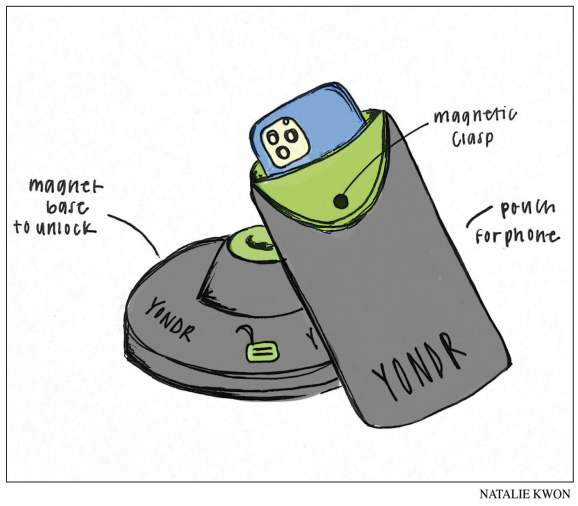
A Yondr pouch is a small lockable case used to store phones during school, preventing use until unlocked in a designated area with a special device. The current proposal within the School’s administration would require students to lock their phones during the first period and carry the pouch for the rest of the day.

On a basic level, this proposal presents practical problems. It’s crucial to acknowledge that Yondr pouches won’t just make phones disappear for the duration of the day. A simple Google search returns countless videos and articles describing how to break open a Yondr pouch. Already, students are discussing workarounds: lying about leaving it at home, breaking open the Yondr pouches at lunch, or even bringing a second phone to school
It seems unlikely the School could prevent these bypasses. If a student claims they left their phone at home, are PC members prepared to interrogate them? Even with the current system of confiscating phones, enforcement has decreased drastically. Who’s to say that would change with the addition of flimsy fabric pouches? Policing students has never been and will never be effective unless faculty are fully invested, and constant enforcement disrupts the collaborative environment the School has worked hard to build.
Students also worry that implementing Yondr pouches will prevent them from contacting family members and guardians in the event of an emergency. While at other moments, students can reach their family members through the Upper School office, an emergency situation wouldn’t provide us with that luxury. A student could be stripped of communication with loved ones if they are unable to break the pouch. Furthermore, fewer phones on hand could cause a potential delay in emergency response time, as students wouldn’t be able to contact authorities.
Cost is another major concern. To buy a pouch for each student would cost over $10,000 for all upper school students. That figure doesn’t even include the pouches that would need to be replaced in the likely event that students figure out how to break them or they lose functionality through simple wear and tear.
We acknowledge the school should regulate phone use to some extent in order to foster a productive learning environment. However, from a philosophical standpoint, we believe the School should approach this issue the same way it’s approached other instances of technological advancement: rather than ban the technology, the School should work with it. For example, the spread of generative AI in schools has prompted teachers to rethink how they administer assignments, and at times, even incorporate AI into the process. Since simply banning the tool or looking over each student’s work with AI checkers proved a complicated and ineffective solution, teachers are now experimenting with other options, such as the use of Bluebooks. The right approach involves the School following that example with the use of cell phones on campus.
The School needs a unified approach to handling the presence of phones on campus that looks towards long-term impacts rather than short-term fixes. Yondr pouches would only exacerbate the real issue: students trying to get around the rules in place. Instead, the PC should focus on standardizing phone expectations, especially in class, by counting phones in the phone home following the example of Dr. Brakeman and other teachers. As we leave the School, we will have to learn to manage technology while continuing to be productive and make meaningful connections. If we haven’t developed that ability now, when will we? Yondr pouches won’t solve the problem—they’ll just put a flimsy lock on it. After all, if a policy is easier to break than the habit it’s targeting, it was never much of a solution.