
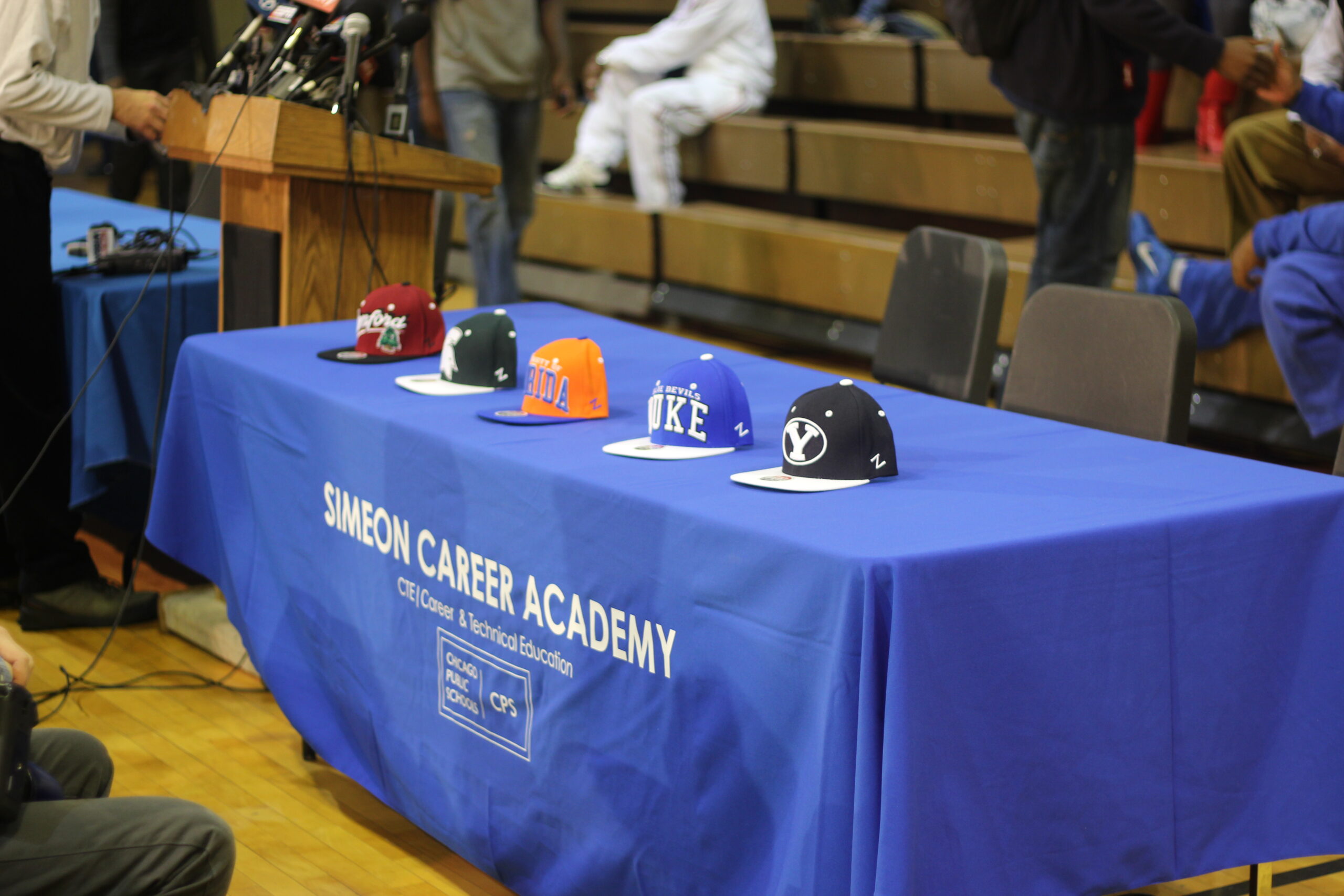
At a preparatory private school, there is no doubt that college lingers in every student’s mind. Juggling both grades and extra-curricular activities, students at the School feel immense pressure to maintain high academics and a major interest. However, a select few at the School take a different path, choosing to pursue one specific sport in order to get recruited and admitted by colleges.
Eight current seniors have been recruited by colleges for their respective sports, exhibiting skills that often place them on national leaderboards. This path to college admissions can be more advantageous, since many colleges will lower the bar for academics and other aspects of the application in favor of sports talent. As a result, students thinking about their future college often invest immense time into sports, honing their skills and showcasing talent for recruiting scouts.
Recently, there has been a rise in the popularity of students taking these paths as a method to get into elite colleges, whether intentional or not. Given the smaller competition pool in niche sports such as fencing and rowing, students competing in these activities have higher recruitment odds than in mainstream sports like soccer, basketball, volleyball, or softball/baseball.
Senior Christian Woo has been an avid fencer for 9 years and is heading to the University of Pennsylvania. Though he was not officially recruited onto the college’s fencing team, Woo was offered to walk on the team informally because of his fencing talent. “While the vast majority of people just do fencing for fun, there is a specific group that focuses a lot or expects to get recruited,” Woo noted. With sports like fencing, those getting scouted for recruitment often comprise a very small group.
“All the top fencers in travel teams—the top 20-40 in the country—all kind of know each other and hang out. It can be a bit overwhelming because then there’s always a lot of rumors and talk about who got which offers during recruiting season,” Woo said. When fencing at the highest level, there can be a lot of external pressure to find college success in such a tight-knit sporting community.
Senior Shrey Kanji describes a similar sentiment for golf, believing that competing in the smaller, recruitment-focused pool of niche sports elevates the pressure. “When you’re playing high-level tournaments, you’re almost always playing with a kid that’s committed somewhere, which puts some pressure on yourself, and all of the players have the intention to play for college.”
As a result, sports recruitment can also be mentally taxing. Kanji is an extremely talented golfer, but did not choose the recruitment path despite receiving offers at multiple colleges. “I was really struggling with my game last March-April, and took a break for a month to kind of decide whether to continue playing or not. I was frustrated,” Kanji reflected, sorting out his emotional needs in relation to his effort. “I felt pressure on myself because I dedicated so much time to myself, and it felt wrong to not play anymore.”
That said, some students are able to navigate the challenges of sports recruiting and find success on their own terms. Senior Henry Tatara recently announced his commitment to Wesleyan University for rowing. “I really enjoyed the recruitment process in rowing because the coaches were very supportive, and it’s a more personal experience where you really get to know them through calls and conversations,” he said.
Like Tatara, seeking help during this college recruitment process is key to finding satisfaction and preventing frustration. Moreover, setting clear priorities can help determine if recruitment is the correct path for you. “Ultimately, I missed playing, which is why I came back to it,” Kanji commented, serving as the current captain for the Men’s Varsity Golf Team. After all, the primary reasons we should play sports shouldn’t solely be for recruitment, but for the love of the game.