
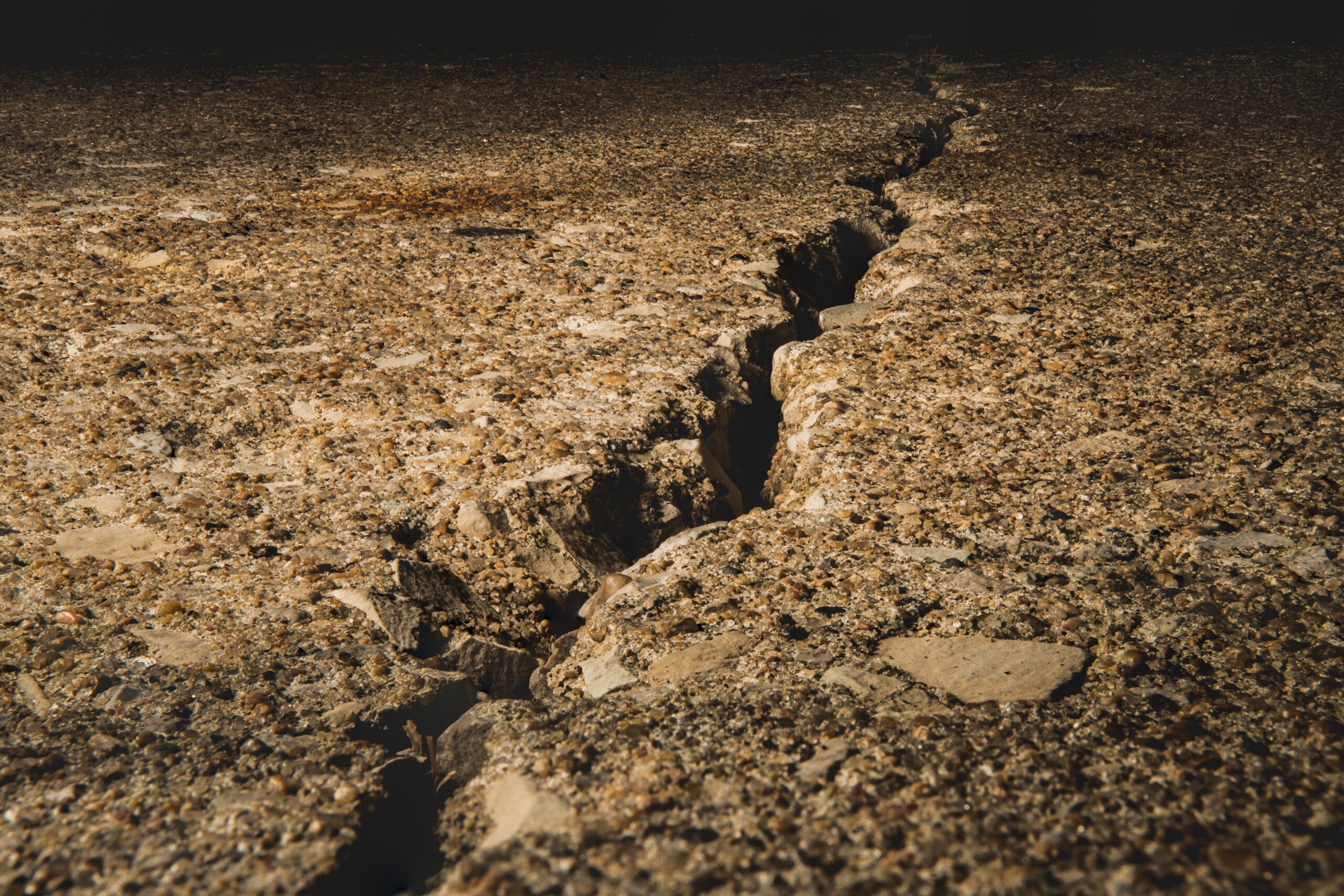
An earthquake with a 4.3 magnitude shook the East Bay, with the origin point located just south of the UC Berkeley campus on September 22nd, 2025. Despite the recent earthquake, students at the School remain relatively unfazed about the possibility of a larger quake.
The quake occurred along the Hayward Fault, which runs down the East Bay from Richmond, through Oakland, all the way to San Jose. The Hayward Fault, along with the San Andreas fault, which traverses down the San Francisco peninsula, are responsible for the Bay Area’s long history of earthquakes.
Since 1836, there have been five earthquakes in the Bay Area with a magnitude of 6.75 or higher and causing notable damage. On average, the fault ruptures every 150 years as tension builds between the two tectonic plates. However, in a recent survey of close to 80 students and faculty members, over two-thirds expressed their worry about a coming earthquake as two or less on a scale of one to five (five being extremely worried).
Still, the threat of a larger earthquake does not escape Upper School history teacher Geoff Evans, who covers earthquakes extensively in his senior seminar, Oakland Through Many Lenses. As a community, he believes it is likely we will never be seriously prepared due to our tendency to simply discount frequent earthquakes as minor inconveniences.
“It’s infrequent enough that people can become too comfy,” he said. “I think it normalizes the impending disaster. When they’re survivable…rather than heighten the preparation, it’ll diminish the preparation.”
Ian Walters, a history and science teacher in the middle school, pointed out the privilege that comes with being able to prepare thoroughly for an earthquake.
Not everyone is fortunate enough “to have the information, the access, the choices, the margin in order to even decide to factor in something so improbable,” he said. “How are you gonna adjust your whole life around a statistical possibility?”
On an industrial level, the earthquake of 1989 significantly heightened structural regulations and led to major updates in statewide building codes. California’s Earthquake Brace + Bolt program offers reimbursement of up to $7,000 for qualifying homes in Oakland looking to retrofit for an upcoming earthquake.
Evans believes we have a long way to go to be truly prepared. “In the same sense that [we] get vaccinated so that the hospitals aren’t swamped, plan your stuff so that the grocery stores aren’t swamped,” he said.
For faculty members like Upper School English teacher David Enelow, who lived in the East Bay during the rupture of 1989, not much has significantly changed in terms of individual preparation, in contrast to a heightening in structural regulation.
“It’s a big deal and then it recedes quickly into the background,” he said. “What am I going to do? Move to some ugly climate to be safe from an earthquake?” In his opinion, those most concerned about earthquakes are people who don’t live in the Bay Area.
Evans, on the other hand, advises members of the community to be more prepared in the event of a larger rupture in the coming years.
“I don’t think that [people] have stored water, I don’t think that they know how to shut off the power, I don’t think that they know where to move, I don’t think that anybody but the institutions know how long the damage is going to be the new reality.”