
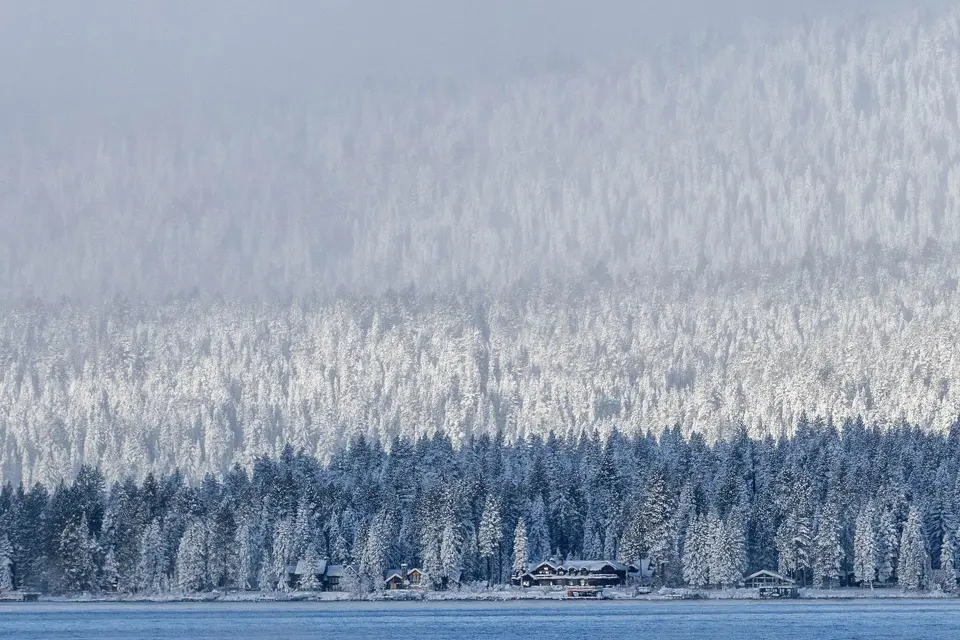
Lake Tahoe is known for its snowy terrain, clear blue water, and world-class ski resorts, but it has recently become the focus of conversation following fatalities in the mountains. Every winter, thousands of people visit the mountains to ski, snowboard, and enjoy a relaxing getaway. However, climate change is beginning to affect the region in ways that make snow sports more dangerous and unpredictable.
Scientists have already documented significant temperature changes in the Tahoe Basin. Over the past 100 years, the average minimum temperature has increased by ~4.2ºF, while the average maximum temperature has risen by ~2ºF according to the Sierra Nevada Regions Report. As temperatures rise, precipitation that once fell as snow increasingly falls as rain. Since snow sports rely on stable snowfall and consistent winter weather, these changes can affect the ski seasons and lead to unstable snow conditions.
Total snowfall in the region has also declined over time. In recent years, it has dropped to record lows. In 2015, snowfall in Tahoe City accounted for only 5.4 percent of the area’s total precipitation. Lower snowfall levels can create weak layers within the snowpack, increasing the risk of avalanches and dangerous conditions for snow athletes and travelers.
Scientist Fiona Lo noted that climate change is altering weather patterns in ways that can make mountain environments less predictable. “What climate change does is it makes extreme weather events more frequent,” she explained. As global temperatures rise, the atmosphere can hold more water vapor, allowing storms to produce heavier rainfall. These intense storms can lead to flooding, rapid snowmelt, and unstable snow conditions in mountain environments. Lo explained that increased temperature variation can make environmental conditions more unstable.
Lo also clarifies that understanding the difference between weather and climate helps scientists identify these long-term patterns. “Weather is how the atmosphere changes on a short time scale, like days to a week,” Lo said. “Climate is what the average weather is over long periods of time.” By studying climate over decades, scientists can see clear warming trends in regions like the Sierra Nevada.
She explained two main ways to respond to climate change: adaptation and mitigation. Adaptation involved adjusting to new conditions, such as preparing communities for extreme weather or improving safety monitoring in mountain areas. Mitigation focuses on reducing greenhouse gas emissions that drive climate change
As temperatures continue to rise, the future of sports in Tahoe may depend on both approaches. Understanding how climate change is transforming the mountain environment and the mountain travel experience is an important step toward protecting both winter recreation and the seemingly fragile ecosystems of the Sierra Nevada.